
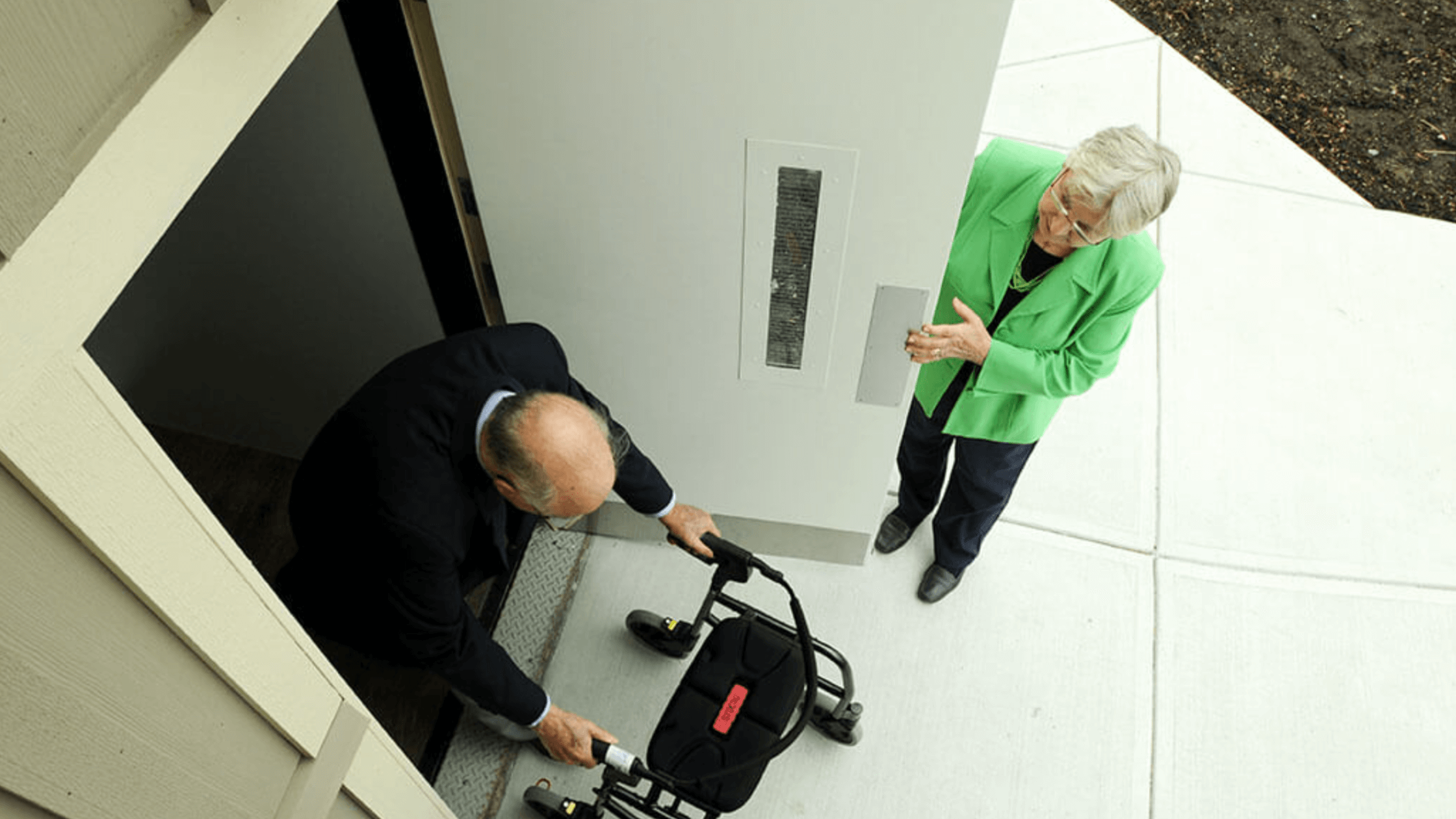
15 Dec How Vertical Platform Lifts Help Contractors Solve Last-Minute Accessibility Issues
For general contractors (GCs) and project managers in the North Texas market, a “last-minute accessibility issue” often manifests during a final walk-through or right before a TAS (Texas Accessibility Standards) inspection. Whether it’s a site constraint that made a planned ramp impossible or a late-stage design change, the pressure to maintain the project timeline while ensuring ADA compliance is high.
Vertical Platform Lifts (VPLs), often referred to as “porch lifts,” have become the go-to strategic tool for contractors needing to bridge short elevation gaps (up to 14 feet) without the massive footprint or structural overhaul required by other methods.
1. Small Footprint, High Impact
The most common “last-minute” hurdle is discovering that a code-compliant ramp simply won’t fit. An ADA-compliant ramp requires 12 inches of horizontal run for every 1 inch of vertical rise.
- Space Savings: A 30-inch rise requires a 30-foot ramp, whereas a VPL typically fits into a compact 5′ x 5′ area.
- Site Versatility: VPLs can be installed in tight garage corners, small side yards, or directly against existing porches where a sprawling ramp would be impractical.
2. Rapid Installation Timelines
When an inspection date is looming, the speed of installation is a critical variable for a project manager.
- Standard Assembly: Once the site is prepared, a basic VPL installation typically takes between 4 to 8 hours.
- Minimal Site Prep: Most VPLs only require a level concrete pad (typically 4 inches thick) and a dedicated electrical outlet, allowing GCs to prep the site quickly without significant structural changes.
3. Solving the “Clinical” Aesthetic
For custom home builders in affluent areas like Southlake or Westlake, a large aluminum ramp can ruin the home’s curb appeal and legacy design.
- Discreet Integration: Modern VPLs are designed to be low-profile and can often be matched to the building’s exterior.
- High-End Options: Enclosed or “hybrid” models provide a more polished, elevator-like feel that aligns with luxury residential standards rather than looking like a temporary medical add-on.
4. Navigating the Texas Regulatory Maze
Failure to pass a TAS or ADA inspection can lead to costly delays or fines.
- Compliance Assurance: VPLs are engineered to meet strict ASME A18.1 and ADA guidelines for unassisted entry and exit.
- Licensed Partnership: Partnering with a Licensed Texas Elevator Contractor—rather than a generic handyman—ensures the lift is installed to code, includes necessary interlocks and sensors, and is backed by professional submittals.
Contractor Pro-Tip: The “Direct Landing” Strategy
If your project is over a 23-inch rise, code often requires a solid, flush gate with a lock at the top landing. Engaging an accessibility expert early can help you determine if you need to build this gate to match the deck or use a manufacturer-provided gate to guarantee it meets the safety lock mechanism requirements.
Disclaimer: This content is for general informational purposes only and does not constitute safety, engineering, or regulatory advice. Equipment selection and outcomes vary based on application, environment, and usage.