
29 Oct Vertical vs. Inclined Platform Lifts: Which Fits Your Accessibility Needs?
Summary:
When it comes to accessibility, not every building or space can accommodate a traditional elevator. That’s where platform lifts come in—safe, reliable systems that make vertical travel possible for wheelchair users in both homes and public buildings. In this article, we’ll explain the difference between Vertical Platform Lifts (VPLs) and Inclined Platform Lifts (IPLs), explore where each option works best, and share how Lift-Aids helps North Texas clients select the right lift for their space and code requirements.
1. What Is a Platform Lift?
A platform lift provides vertical movement for those in wheelchairs or individuals with mobility limitations who may have difficulty using stairs. Unlike an elevator, which is enclosed and operates with a cab, a platform lift features an open design, allowing people to roll in a wheelchair or walk directly onto the platform.
Platform lifts come in two main styles:
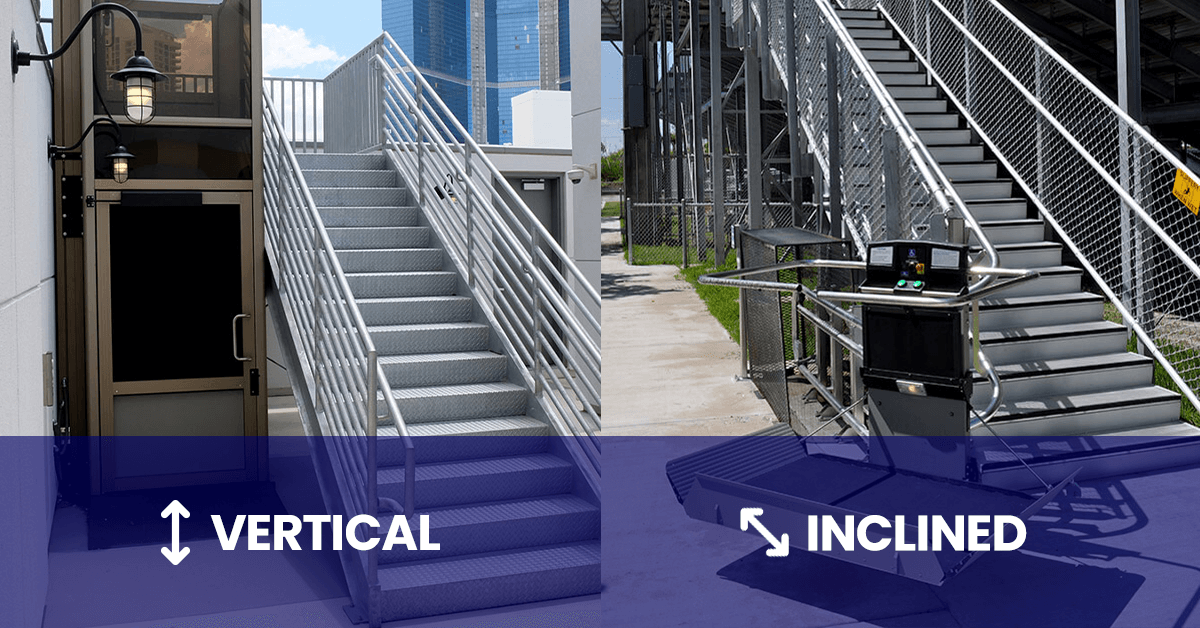
- Vertical Platform Lifts (VPLs): Move straight up and down, similar to a mini-elevator.
- Inclined Platform Lifts (IPLs): Travel along the angle of a staircase.
Both are designed to meet ADA and Texas Accessibility Standards (TAS) requirements when installed by a licensed contractor. The best choice depends on your building layout, available space, and daily usage.
2. Vertical Platform Lifts (VPLs): Compact and Efficient
A Vertical Platform Lift travels vertically between two or more levels—usually no more than 14 feet of total travel distance. Think of it as a small, self-contained elevator that’s perfect for porches, stages, or short interior lifts.
Common Applications:
- Church or school stages
- Office building entries
- Residential garage-to-porch access
- Community centers and small commercial buildings
Advantages of a VPL:
- Straight vertical travel—no stairway modification required.
- Small footprint fits tight exterior or interior spaces.
- Simple operation with easy-to-use push-button controls.
- Weather-resistant models are available for outdoor use.
- Meets ADA and TAS guidelines when installed by a licensed contractor.
VPLs are often the go-to choice for entryways and raised platforms, offering a sturdy, space-efficient solution that blends safety and convenience.
3. Inclined Platform Lifts (IPLs): Ideal for Existing Stairways
An Inclined Platform Lift carries users along the angle of an existing stairway. The lift platform folds against the wall when not in use, allowing the stairs to remain accessible to others.
Common Applications:
- Historic buildings with limited construction options
- Multi-level schools, churches, or libraries
- Residential staircases where vertical space is limited
Advantages of an IPL:
- Uses existing stairways—no need for a hoistway or pit.
- Minimizes structural changes, making it ideal for retrofits.
- Fold-away platform preserves regular stair access.
- Custom rail systems are designed to fit straight or curved staircases.
- Quiet, smooth travel for users and caregivers.
IPLs are especially valuable when space or architecture makes vertical travel impossible. For older or historic buildings, this is often the least invasive—and most code-friendly—option.
4. Key Differences at a Glance
| Feature | Vertical Platform Lift (VPL) | Inclined Platform Lift (IPL) | |||
| Travel Direction | Straight up and down | Follows the angle of stairs | |||
| Installation Location | Beside porches, platforms, or short walls | Along existing staircases | |||
| Construction Needs | May require pit and landing gates | Mounts directly to stair or wall | |||
| Ideal Use | New construction or outdoor access | Retrofits or limited-space interiors | |||
| Footprint | Small, vertical | Wider—matches stair width | |||
| Operation | Enclosed or semi-enclosed platform | Folding platform on rails | |||
| Best For | Entryways, stages, decks | Multi-level interior stairs | |||
5. Installation and Compliance Considerations
Because platform lifts are classified as accessibility equipment, they must meet stringent code standards set by the Texas Department of Licensing and Regulation (TDLR).
A licensed Texas Elevator Contractor will help to ensure:
- Correct platform size and weight capacity for wheelchair use.
- Proper clear floor space at landings.
- Controls and safety features are positioned for accessibility.
- Electrical and pit specifications for meeting TAS and ADA.
This expertise is especially important in commercial and public spaces, where inspections and documentation are required for compliance.
6. Outdoor vs. Indoor Applications
Both VPLs and IPLs can be installed indoors or outdoors, but certain designs perform better in specific environments.
For outdoor use:
- VPLs are typically preferred due to their compact, weather-sealed enclosures.
- Enclosures and non-slip platforms protect users from wind and rain.
For indoor use:
- IPLs work well when adding accessibility to existing stairways or mezzanines.
- Their folding platforms maintain a clean, unobtrusive look in hallways or foyers.
In either setting, Lift-Aids, Inc. is here to help you select the right model, finish, and features for long-term reliability and aesthetic integration.
7. Real-World Example: Community Center Retrofit in North Texas
A community center in the Fort Worth area recently needed to make its main stage accessible without altering the structure. Installing a full elevator wasn’t feasible due to space and cost.
Lift-Aids recommended a Vertical Platform Lift beside the stage. The system provided safe, independent access for wheelchair users while preserving the building’s layout.
The project passed inspection on the first review and was completed in just a few weeks, saving both time and money while improving ADA compliance for the entire facility.
8. Key Takeaways: Choosing Between Vertical and Inclined Lifts
- Vertical Platform Lifts (VPLs) are compact, self-contained, and ideal for use in entryways and outdoor areas.
- Inclined Platform Lifts (IPLs) fit existing stairways with minimal construction.
- Both solutions meet ADA and TAS when installed by licensed professionals.
- VPLs are suitable for new builds or additions, while IPLs work best for retrofits.
- Early consultation ensures the best lift choice for your space and budget.
9. Plan Your Accessibility Upgrade with Confidence
Platform lifts offer practical and affordable accessibility without the scale or cost of a traditional elevator. Whether your project involves a church, school, office, or private residence, choosing the right lift type ensures safety, compliance, and comfort for every user.
Contact Lift-Aids, Inc. to speak with a professional about your project needs and goals. We’re happy to consult with you on the best accessibility option for your project.