
25 Mar Vertical Platform Lift vs. Inclined Platform Lift: How to Choose the Right Wheelchair Lift for Your Home
If someone in your home uses a wheelchair, navigating stairs can feel impossible. The good news? You have real options. Two of the most popular solutions are the vertical platform lift (VPL) and the inclined platform lift (IPL). Both can make your home safer and easier to navigate. But they work very differently. And choosing the wrong one can cost you time, money, and frustration.
This guide will walk you through how each lift works, where it fits best, and what to think about before you decide.
What Is a Vertical Platform Lift?
A vertical platform lift moves straight up and down, just like a small elevator. The user rolls their wheelchair onto an open platform. The lift raises them from one level to the next.
VPLs are a great choice for homes with a clear vertical gap between two levels. Think of a raised entry, a split-level home, or a porch that sits several feet above the ground. The lift needs a defined space above and below, and it requires a solid surface to mount to.
Common uses for a VPL:
- Getting from the driveway or yard up to the front door
- Moving between split levels inside the home
- Accessing a deck or raised patio
- Elevation changes up to 14 feet
VPLs are sturdy, simple to operate, and work well outdoors. Many models are weather-resistant and built to handle Texas heat and humidity.
What Is an Inclined Platform Lift?
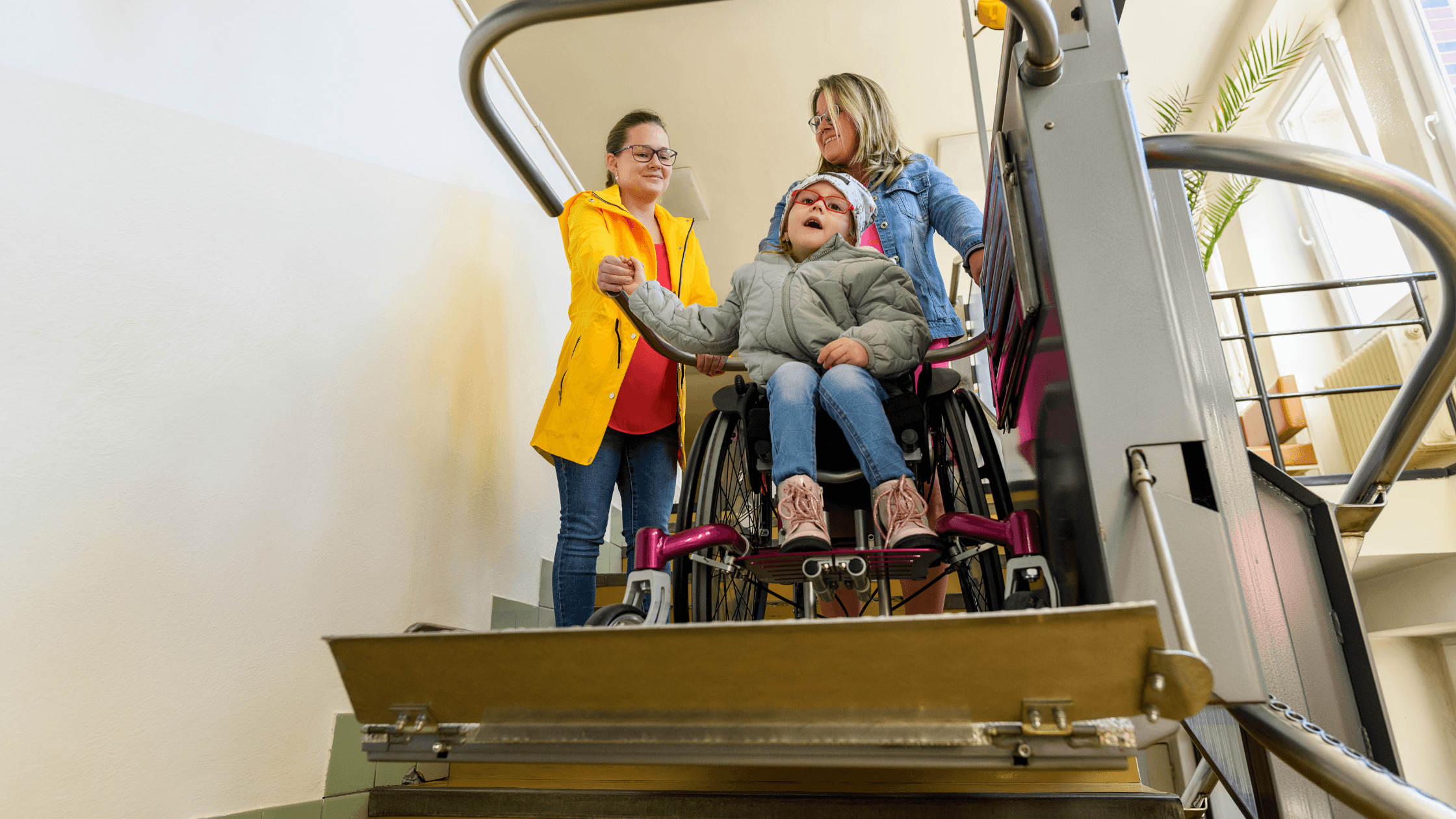
An inclined platform lift travels along a staircase at an angle, following the slope of your stairs rather than going straight up. The platform folds out flat so a wheelchair can roll onto it. Then it travels up or down the rail system mounted to your staircase.
IPLs are designed for homes where the stairs are the problem, and where you can’t or don’t want to remove them.
Common uses for an IPL:
- Straight or curved indoor staircases
- Situations where others in the home still need to use the stairs
- Homes where there’s no room to install a vertical lift
- Older homes where structural changes are not an option
One thing to know: inclined platform lifts take up more of the staircase than a standard stair lift. The platform itself is larger because it needs to fit a full wheelchair. This is something to measure carefully before you commit.
Side-by-Side Comparison
| Feature | Vertical Platform Lift | Inclined Platform Lift |
| Direction of travel | Straight up and down | Along the angle of the stairs |
| Best for | Short vertical rises | Existing staircase access |
| Space needed | Defined vertical space | Along the staircase |
| Works outdoors | Yes | Usually indoors only |
| Staircase required | No | Yes |
| Installation complexity | Moderate | Low to moderate |
| Typical rise capacity | Up to 14 feet | Varies by staircase length |
How to Choose the Right One for Your Home
Choosing between a VPL and an IPL comes down to three things: your home’s layout, your specific mobility needs, and your budget.
Choose a vertical platform lift if:
- You need to get over a raised entry, porch, or split-level
- You want something that works outdoors
- You have the wall space or foundation needed for installation
- You don’t want to modify your staircase
Choose an inclined platform lift if:
- Your main challenge is an indoor staircase
- Other household members still need to use the stairs
- Structural changes to your home aren’t practical
- Your staircase is straight (straight staircases are easier and less expensive to equip)
If your home has a curved staircase, inclined platform lifts can still work. But the track will need to be custom-built to follow the curve. This adds cost and lead time, so plan ahead.
What About Cost?
We get this question a lot. The honest answer is: it depends on your specific situation.
Vertical platform lifts generally have a wider price range depending on the rise height, whether they need an enclosure, and whether they’re installed indoors or outdoors.
Inclined platform lifts vary based on staircase length and configuration. Straight stairs cost less. Curved stairs cost more.
The best way to get an accurate number is to have someone assess your home in person. What looks simple in a photo often has details that change the installation plan.
Don’t Forget About Safety and Compliance
Both VPLs and IPLs are built with safety features like non-slip surfaces, safety sensors, and easy-to-use controls. In Texas, accessibility equipment installed in homes must meet certain standards. If you’re using the lift for ADA compliance in a commercial setting, the requirements are more specific. For residential use, the priority is matching the right equipment to your home and your loved one’s needs.
Still Not Sure Which Lift Is Right for You?
That’s completely normal. Most families aren’t experts in accessibility equipment. They shouldn’t have to be. That’s what we’re here for.
At Lift-Aids, we serve homeowners across the Dallas-Fort Worth Metroplex and surrounding North Texas communities. We’ll come to your home, look at your space, and give you honest advice on which solution makes the most sense. No pressure. No upsell.
Ready to get started? Request a free estimate today. We’ll help you find the right lift so your home works for everyone in it.