
20 Apr Vertical Platform Lifts vs. Ramps for Commercial ADA Compliance in Texas: A Contractor’s Comparison
For general contractors, project managers, and commercial architects operating in the Dallas-Fort Worth Metroplex, achieving compliance with the Texas Accessibility Standards (TAS) is a critical milestone for securing a Certificate of Occupancy. When a commercial project presents a short-rise elevation gap—such as a loading dock, a split-level office floor, or a raised auditorium stage—builders traditionally default to a ramp.
However, underestimating the spatial, structural, and financial impact of a sprawling ramp can quickly lead to design friction. Evaluating a Vertical Platform Lift (VPL) against a traditional ramp through a strict operational lens reveals which solution offers the highest return on investment for Texas commercial builds.
1. The Spatial Math: Footprint vs. Square Footage
The most glaring conflict between ramps and vertical lifts is the physical space they occupy. Texas commercial builds must adhere to strict slope ratios that rapidly consume valuable, leasable floor space.
- The Ramp Tax: TAS mandates a maximum slope of 1:12 for commercial ramps, meaning every 1 inch of vertical rise requires 12 inches of horizontal run. To bridge a modest 36-inch elevation change, a contractor must frame 36 linear feet of ramp. When you add the required 5′ x 5′ landing pads at the top, bottom, and any turning point, a simple ramp can easily swallow over 250 square feet of real estate.
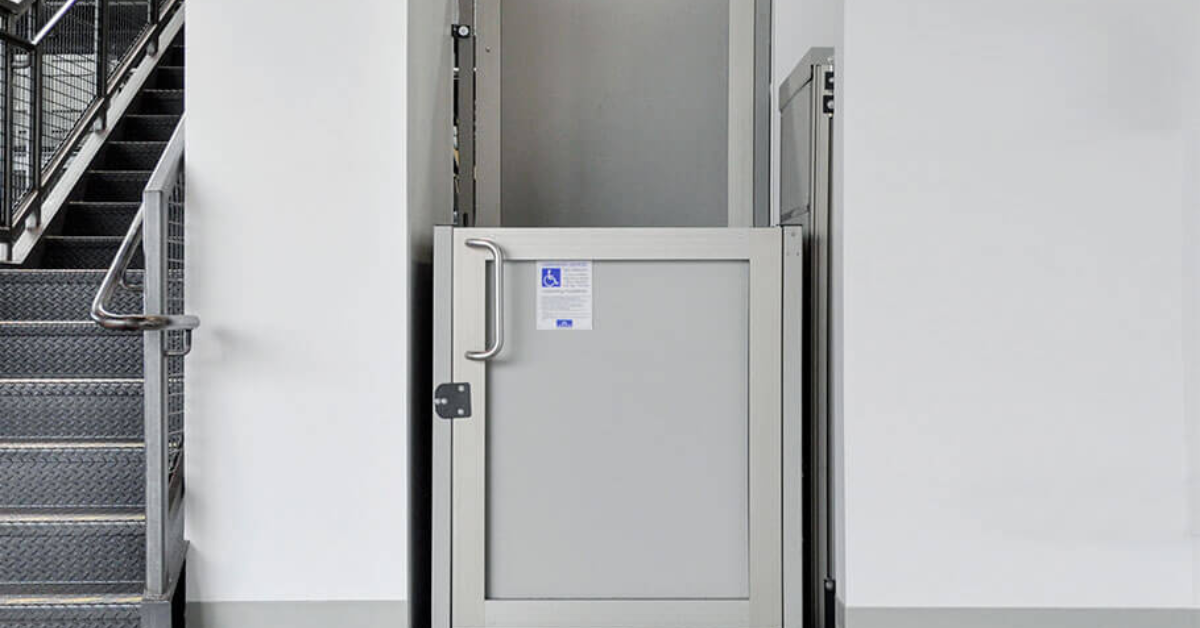
- The VPL Alternative: A commercial vertical platform lift, such as the Genesis OPAL, moves entirely in a vertical plane. Regardless of whether the rise is 12 inches or 60 inches, the lift maintains a compact, static footprint of roughly 5′ x 5′. Reclaiming 200+ square feet of commercial floor space directly protects the building owner’s bottom line and preserves open architectural layouts.
2. Total Cost of Ownership and Installation Velocity
While the initial equipment cost of a commercial VPL is higher than the raw materials for a basic wooden or concrete ramp, the total cost of installation and project velocity paint a different picture.
- Construction Delays: Pouring a permanent concrete ramp requires extensive site prep, forming, rebar reinforcement, and curing time, which can stall a project for days.
- Turnkey Assembly: A surface-mounted commercial VPL can typically be anchored to an existing 4-inch reinforced concrete slab and fully commissioned within 4 to 8 hours. For general contractors facing a tight project deadline, this rapid installation minimizes labor overhead and keeps the critical path moving.
- Long-Term Flexibility: Ramps are permanent structural modifications. If a commercial tenant renovates or vacates the space, removing a concrete ramp is a costly demolition project. A VPL can be unbolted and relocated or removed with minimal structural remediation.
3. The Compliance Matrix: TAS Inspections and Local Licensure
In Texas, any commercial construction project with a total estimated cost of $50,000 or more must be registered with the Texas Department of Licensing and Regulation (TDLR) and undergo a formal TAS review.
- The Independence Mandate: TAS guidelines emphasize “unassisted independent access.” While long, winding ramps are technically compliant, they can be physically exhausting for individuals with limited upper-body strength, functioning as a practical barrier. A push-button VPL provides effortless, independent vertical transit.
- The Licensure Moat: Contractors must be aware that general construction crews cannot legally install vertical lifting equipment in Texas. All commercial lifts must be spec’d, installed, and certified by a Licensed Texas Elevator Contractor. Partnering with a legacy firm that understands ASME A18.1 safety codes ensures your submittals pass the Registered Accessibility Specialist (RAS) review without costly eleventh-hour revisions.
Technical Comparison for Commercial Specifiers
| Feature | Code-Compliant Commercial Ramp | Commercial Vertical Platform Lift |
| Space Required (36″ Rise) | 36+ linear feet plus landings | Approx. 5′ x 5′ static footprint |
| Installation Time | Several days (forming, pouring, curing) | 4 to 8 hours on a prepared slab |
| Structural Impact | Permanent, high-impact alteration | Low-impact, surface-mount options |
| Regulatory Hurdles | Standard framing/concrete inspections | Must be installed by a Licensed Contractor |
Strategic Takeaway for Project Managers
For North Texas builders, choosing between a ramp and a VPL is ultimately a choice between horizontal sprawl and vertical precision. When square footage is tight, timelines are aggressive, and design integrity cannot be sacrificed, an engineered vertical lift provides a compliant, high-ROI alternative that protects your project’s schedule and your client’s space.
Disclaimer: This content is for general informational purposes only and does not constitute safety, engineering, or regulatory advice. Equipment selection and outcomes vary based on application, environment, and usage.