
13 Apr How Residential Elevators Increase Resale Value and Marketability for New Luxury Builds in DFW
The luxury residential real estate market in the Dallas-Fort Worth Metroplex is undergoing a significant shift. High-net-worth buyers are no longer viewing custom homes through a purely aesthetic lens; instead, they are prioritizing structural longevity and forward-thinking functionality. Integrating a residential elevator into a new luxury build is a strategic design choice that expands the potential buyer pool, enhances architectural marketability, and protects the property’s long-term equity.
For custom home builders, architects, and estate developers in communities like Westlake, Southlake, and Highland Park, a residential lift is an essential asset for maximizing a luxury home’s resale value.
1. Broadening the Buyer Base: Capturing the Wealthiest Demographic
The primary driver of the demand for residential lifts is a shifting demographic. A substantial portion of the luxury home-buying market consists of affluent baby boomers and retirees who have the capital to invest in premium real estate but require properties that support aging in place.
- Removing the “Second-Floor Barrier”: For many buyers over the age of 60, a spectacular master suite or a custom media room on the upper levels becomes a liability rather than an asset if it can only be accessed via stairs. An elevator eliminates this concern, keeping the entire square footage of the home functional.
- Multi-Generational Appeal: Luxury estates in North Texas frequently accommodate multi-generational living. An elevator allows grandparents, parents, and children to navigate a multi-story home safely, making the property vastly more attractive to large families.
- The “Forever Home” Premium: Buyers are willing to pay a premium for a home they know they will never be forced to sell due to future mobility changes. Specifying an elevator during the new build phase infuses the property with this long-term security.
2. Architectural Marketability and Universal Design
In the high-end DFW market, luxury is defined by seamless convenience. Features that were once considered modifications are now celebrated as pillars of universal design.
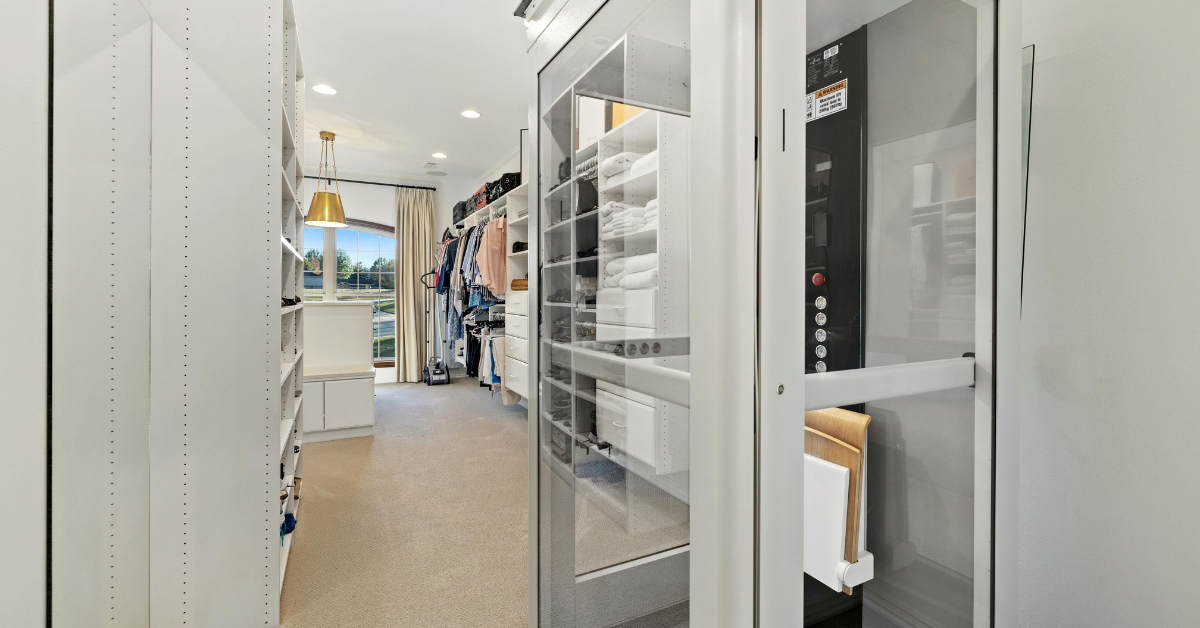
- Design Integration over Afterthoughts: Retrofitting an elevator into an existing home often requires sacrificing closets or altering room layouts, which can disrupt the original architectural flow. Incorporating a system like the Elvoron series during a new build allows architects to position the elevator cab as a central design feature, complete with custom wood finishes, glass walls, or flush-mounted luxury doors.
- Functional Luxury: Beyond mobility assistance, a home elevator serves a practical, everyday operational role in a large estate. Moving heavy luggage, seasonal decorations, household supplies, and groceries between levels becomes effortless, enhancing the daily living experience.
3. Tangible ROI: How Lifts Impact Appraised Value
While the exact return on investment for high-end home amenities varies by neighborhood, residential elevators consistently deliver strong asset protection.
- Compounding Equity: Real estate professionals and appraisers recognize that a professionally installed, code-compliant residential lift adds distinct line-item value to an appraisal. In custom DFW builds, an elevator can add between $20,000 and $40,000 or more to the home’s baseline valuation.
- Reduced Days on Market (DOM): Because multi-story homes without lifts exclude a massive segment of affluent buyers, they frequently sit on the market longer. An elevator minimizes this friction, accelerating the transaction timeline when the property eventually goes to resale.
4. Risk Mitigation: The Value of a Licensed Texas Contractor
To ensure that a residential elevator acts as a value driver rather than a liability during a future home inspection, the installation must be technically flawless.
- Adherence to ASME A17.1: Residential lifts must strictly comply with national safety codes, including specific clearance rules designed to prevent entrapment.
- The Importance of Local Licensure: In Texas, general contractors cannot self-perform elevator installations. The system must be put in place by a Licensed Texas Elevator Contractor.
- The Legacy Moat: Utilizing a trusted local partner with a long history in the Metroplex—such as Lift-Aids, serving Texas since 1968—ensures that the equipment is backed by impeccable submittals, a reliable warranty, and 24/7 local service history, which can be passed directly to the next homeowner.
Strategic Takeaway for Luxury Specifiers
For builders and developers, an elevator should not be viewed as an expensive add-on, but as an equity-preservation tool. By eliminating vertical barriers from the initial floor plan, you ensure the property retains its premium marketability, appeals to the highest tier of buyers, and stands out in the competitive North Texas luxury landscape.
Disclaimer: This content is for general informational purposes only and does not constitute safety, engineering, or regulatory advice. Equipment selection and outcomes vary based on application, environment, and usage.