
01 Jul How Long Does It Take to Install a Home Elevator in Texas?
There is no single answer that fits every project, since a home elevator install is really several projects layered together: design, permitting, fabrication, structural work, and inspection. What follows is a realistic look at each phase and what tends to speed it up or slow it down. Your actual schedule depends on your home, your city’s permitting office, and current equipment lead times, so treat these as general phases rather than a promise.
What Are the Phases of a Home Elevator Installation?
- Design and site assessment. A licensed elevator contractor evaluates your home, confirms pit depth, overhead clearance, and drive system fit, and finalizes cab size and finishes. New construction projects move through this phase faster since the elevator is designed alongside the rest of the home.
- Permitting. In Texas, private residential elevators are reviewed by your local municipal building department, which enforces ASME A17.1-2022 safety standards. Permitting timelines vary by city and by how busy that office is at the time you apply.
- Fabrication. The elevator components, including the drive system, cab, and doors, are built to your specifications. Custom finishes and non-standard cab sizes generally add more fabrication time than a standard configuration.
- Structural and electrical prep. This is where retrofits usually take longer than new builds. Framing a hoistway into an existing home, cutting or working around a foundation slab, and running dedicated electrical circuits all take more coordination than building the shaft into new framing from day one.
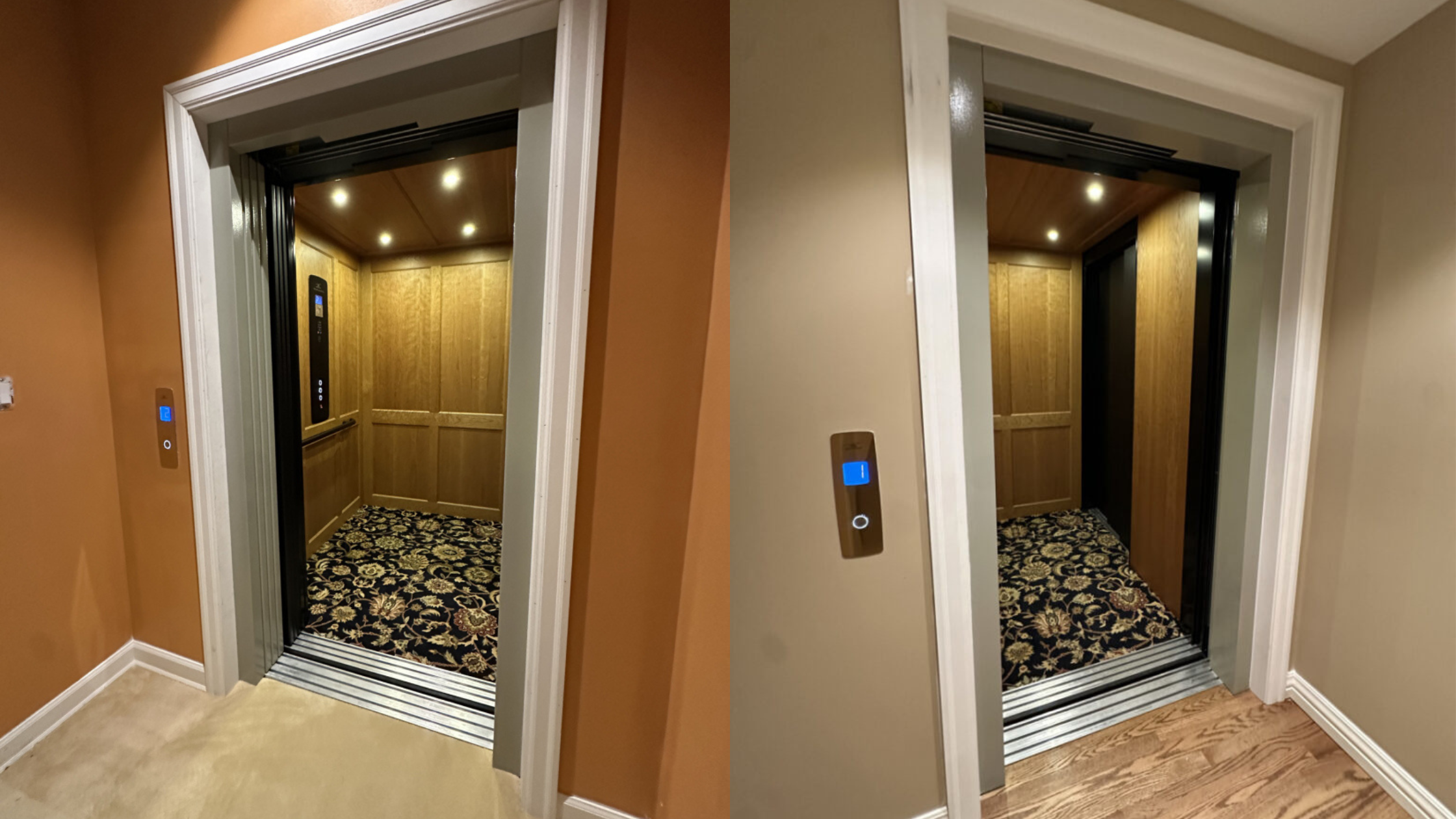
- Installation. The elevator itself, once components arrive and the space is ready, is typically installed over a matter of days rather than weeks.
- Inspection and final approval. Your local building department performs a final inspection before the elevator is cleared for regular use.
Does a New Build Install Faster Than a Retrofit?
Generally, yes. When an elevator is part of the original home design, the shaft, electrical, and structural elements are built once, in the right place, alongside everything else. A retrofit adds extra steps: assessing the existing structure, sometimes reworking a roofline or foundation, and fitting new electrical circuits into a finished home. Neither path is difficult for an experienced contractor, but a retrofit typically requires more lead time up front for planning.
Who Handles Permitting for a Residential Elevator in Texas?
Your local municipal building department, not a state agency, reviews and permits private residential elevator installations. This is different from commercial buildings, which fall under the Texas Department of Licensing and Regulation. Because permitting offices vary by city, a contractor familiar with your specific municipality, whether that is Fort Worth, Dallas, Tyler, Waco, Lubbock, Amarillo, Midland, or El Paso, can help set realistic expectations early.
How Can I Get an Accurate Installation Timeline for My Home?
The only reliable way is a site-specific assessment. Your home’s foundation, ceiling heights, electrical panel, and local permitting office all factor into your real schedule, and no two projects look exactly alike. Lift-Aids is a licensed Texas elevator contractor, family owned and women owned, serving North Texas since 1968.
Request an estimate or call (817) 835-0035 to get a project-specific timeline for your home.
Disclaimer: This content is for general informational purposes only and does not constitute safety, engineering, or regulatory advice. Equipment selection and outcomes vary based on application, environment, and usage.