
12 Jan Enclosed vs. Open Platform Lifts: How to Choose the Right ADA Accessibility Solution
For architects, facility managers, and general contractors across Dallas-Fort Worth, choosing a Vertical Platform Lift (VPL) is about more than bridging an elevation change. The right lift must align with your site conditions, traffic level, environment, and the Texas Accessibility Standards (TAS).
One of the most important early decisions is whether your project calls for an open (unenclosed) platform lift or an enclosed platform lift. While both can provide an accessible path of travel, they are designed for different applications and come with different code, budget, and construction considerations.
This guide breaks down the differences in plain language so your team can specify the right solution the first time.
What Is an Open (Unenclosed) Platform Lift?
An open platform lift is a VPL that travels vertically without a full hoistway enclosure. Instead of a shaft, it typically includes:
- A platform
- A guard panel or carriage panel
- Safety gates at the upper and lower landings
Open lifts are commonly used for short-rise accessibility barriers in both commercial and residential settings.
Benefits of Open Platform Lifts
Minimal Footprint for Tight Retrofits
Open lifts are often chosen when a ramp is not feasible due to space limitations. Since they move vertically, they can solve short-rise barriers without requiring a long ramp run or multiple landings.
This makes them a strong option for:
- Split-level lobbies
- Small stage access points
- Mezzanine transitions
- Historic buildings with limited space
Lower Site Preparation Requirements
Many open lifts can be surface-mounted with minimal excavation. Depending on the lift and site conditions, this may reduce the need for major concrete demolition.
Site requirements vary by model and code conditions, so lift selection should be coordinated early with the contractor and design team.
Practical for Low-Traffic, Short-Rise Areas
Open lifts are typically best for low-to-moderate traffic environments where the lift will serve a specific barrier rather than acting as a primary vertical circulation system.
What Is an Enclosed Platform Lift?
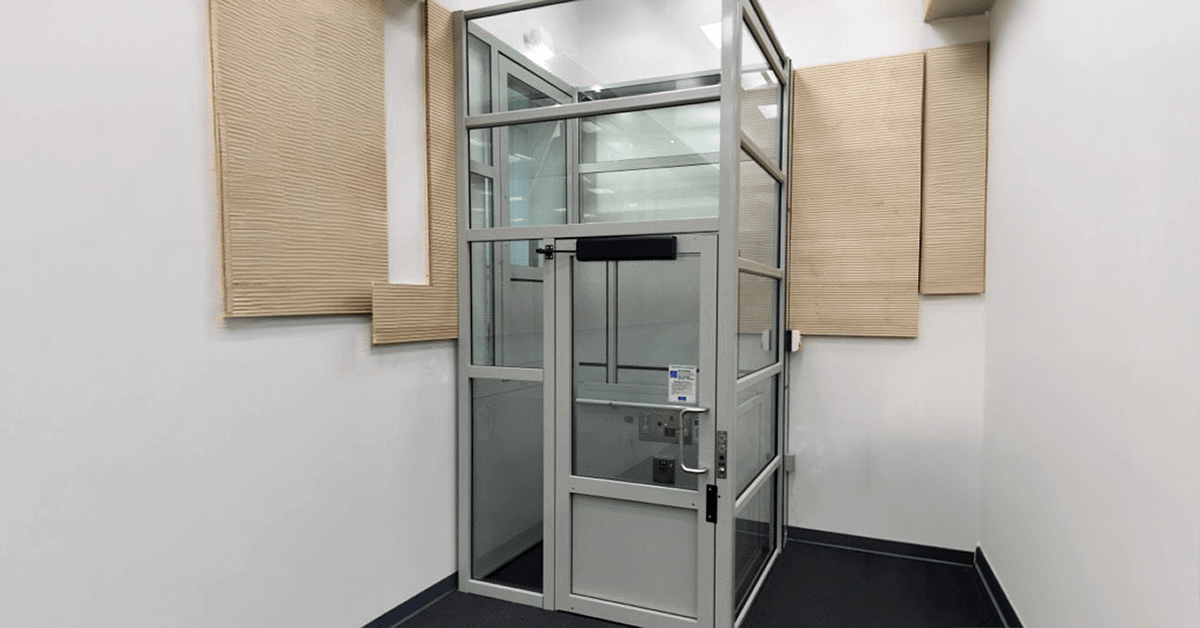
An enclosed platform lift operates within an enclosure, either:
- Factory-built
- Custom-built
- Or a combination of both
The enclosure surrounds the platform for the full travel height. In many cases, the lift includes full-height doors at each landing and a more protected travel path.
Enclosed platform lifts are commonly used in commercial applications, outdoor installations, and higher-traffic environments.
Benefits of Enclosed Platform Lifts
Added Safety and User Confidence
An enclosure provides additional protection for both the passenger and the surrounding space. It also creates a more secure travel path, which can be important in public-facing facilities.
For many users, an enclosed lift feels more private and more comfortable, especially in professional environments.
Better Fit for Outdoor and Harsh Conditions
North Texas weather can be tough on exposed equipment. For outdoor installations, an enclosed lift can help protect the rider and reduce exposure of mechanical components to:
- Wind
- Rain
- Extreme heat
- Debris
While maintenance is still required over time, enclosed systems are generally better suited for long-term outdoor use.
A More Permanent, Finished Look
In many properties, especially medical offices, professional buildings, and high-end residential projects, an enclosed lift can better match the architectural intent.
Some enclosures can be finished with glass panels or custom colors, depending on the manufacturer and design goals.
Key Differences: Open vs. Enclosed Platform Lifts
1. Travel Height and Code Requirements
Travel height is one of the most important factors in lift selection.
In many commercial settings, an enclosure may be required once the lift travels beyond a certain height. This is often tied to safety code requirements and inspection standards.
Because TAS and TDLR requirements can vary by application, it is important to coordinate early with a Licensed Texas Elevator Contractor to confirm what is permitted for your specific project.
2. Indoor vs. Outdoor Environment
For indoor short-rise barriers, open lifts may be a practical solution.
For outdoor lifts, enclosed models are often preferred due to environmental exposure and user comfort. Even in covered outdoor spaces, enclosure requirements may apply depending on travel height and location.
3. Traffic Level and Public Access
Open lifts are often best for lower-traffic areas where access is controlled.
Enclosed lifts are frequently chosen for:
- Higher-traffic commercial buildings
- Public-facing spaces
- Facilities that need a more secure lift path
Enclosures can also help prevent access to the lift’s travel area and reduce misuse in some environments.
4. Budget and Construction Complexity
Open lifts are often more cost-effective, especially when site conditions allow surface mounting.
Enclosed lifts typically involve additional structural coordination, enclosure construction, and finish considerations. They may have a higher total project cost, but they can also deliver a more complete long-term solution in the right setting.
When a Platform Lift May Not Be the Best Fit
In some projects, neither an open nor an enclosed VPL is the ideal solution.
If the travel height, traffic volume, or building use requires a more robust vertical system, your team may need to evaluate a LU/LA elevator or other code-compliant equipment.
A lift contractor can help determine when a platform lift is appropriate versus when an elevator is the better long-term solution.
How Lift-Aids Helps DFW Teams Specify the Right Lift
Choosing the right accessibility equipment is only part of the process. The other part is ensuring your lift is correctly specified, permitted, and installed to meet TAS and TDLR requirements.
Lift-Aids supports North Texas commercial and residential projects by providing:
- Equipment recommendations based on site conditions
- CAD submittals and technical coordination
- Guidance for compliance planning
- Professional installation by a Licensed Texas Elevator Contractor
If your project includes a short-rise barrier or a vertical access requirement, our team can help you evaluate options before the design becomes costly to revise.
Disclaimer: This content is for general informational purposes only and does not constitute safety, engineering, or regulatory advice. Equipment selection and performance vary based on application, environment, installation conditions, and usage.