
25 May How Ceiling Track Lifts Are Specified in New Home Construction
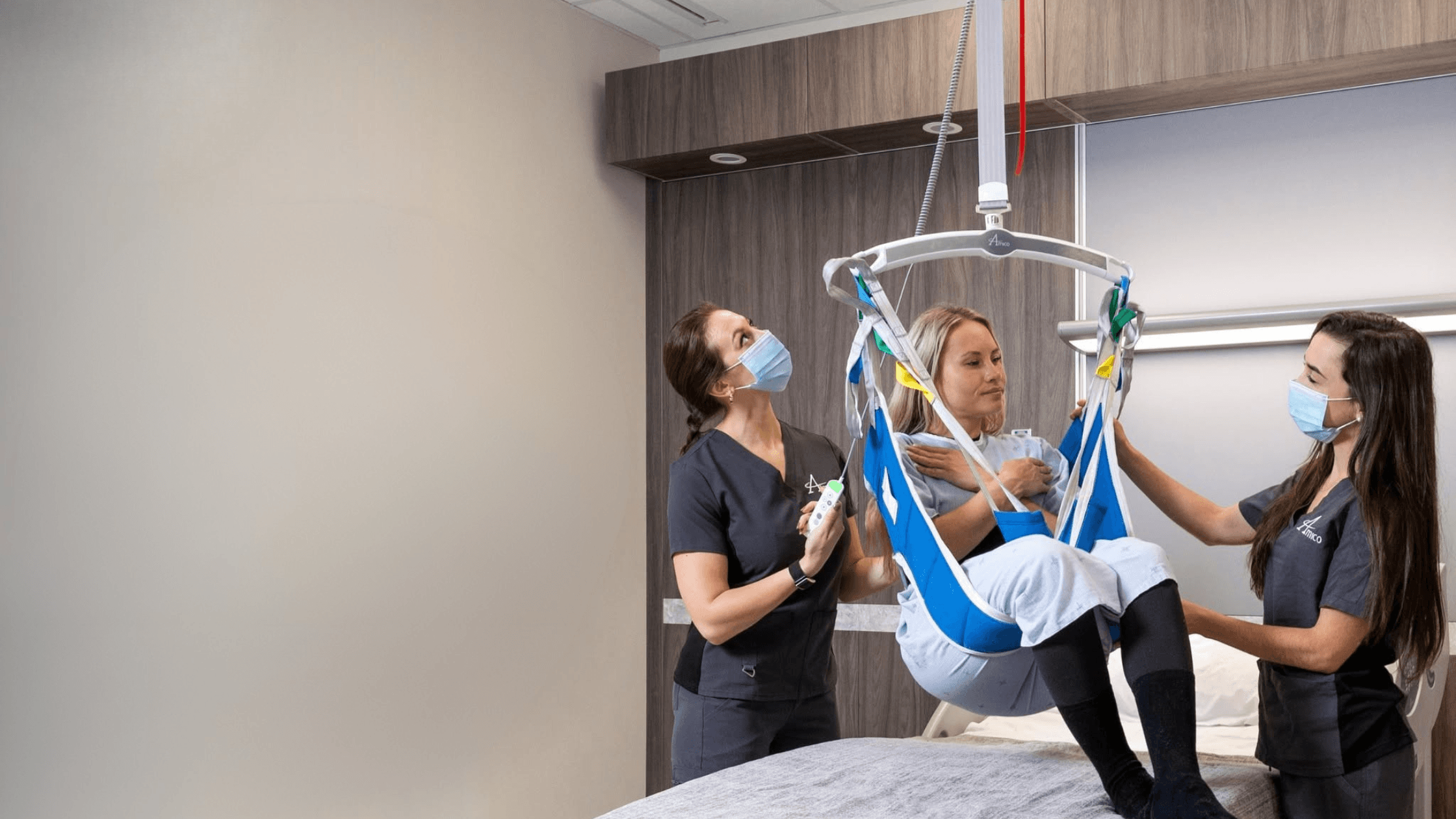
Ceiling track lifts have become one of the most recommended accessibility solutions for North Texas homes where a family member requires caregiver-assisted transfers. Unlike portable Hoyer lifts or floor-based systems, a ceiling track lift is permanently installed in the home and allows a caregiver to move a person safely from a bed to a wheelchair, a shower chair, or a commode without manual lifting. The result is a significant reduction in caregiver injury risk and a meaningful improvement in dignity and daily routine for the person being assisted.
While ceiling track lifts can be added to existing homes, the easiest and most cost-effective time to install one is during new construction. Specifying a ceiling track system during the framing stage allows the track, structural blocking, and motor mounting points to be built directly into the home. This guide is for builders, contractors, and families who are planning new construction in North Texas and want to understand how ceiling track lifts are properly specified from the ground up.
What Is a Ceiling Track Lift System?
A ceiling track lift system consists of a motorized lift unit that travels along a track mounted to the ceiling. The track can be configured as a straight single-room run, an H-track system that covers multiple positions within a room, or a multi-room system that allows the lift to travel through doorways and between rooms using a specially designed swing arm or curved track section.
The lift unit suspends a sling beneath it. The caregiver positions the sling under the person being transferred, then operates the lift via a pendant controller to raise the person, move them along the track, and lower them to the destination. The entire transfer can typically be performed by a single caregiver without manual lifting.
Why New Construction Is the Best Time to Specify a Ceiling Track Lift
Installing a ceiling track lift after a home is built requires opening ceilings, locating joists, installing blocking, and patching drywall. In many homes, this is a manageable process, but it adds cost and disruption that can be entirely avoided when the system is specified during the construction phase.
In new construction, the framing crew can install structural blocking between ceiling joists in any room where the track will run. The electrician can rough in the dedicated circuit for the motor and the pendant outlet during the initial electrical rough-in. The track hardware can be installed before drywall, and the motor and sling can be added after finish work is complete. The result is a cleaner installation, lower labor cost, and no disruption to finished surfaces.
Where Ceiling Track Lifts Are Most Commonly Specified in New Homes
Ceiling track lifts are most often specified in the following areas of a new home:
Primary Bedroom and En Suite Bathroom
The most common application is an H-track or straight track system that runs from the primary bedroom to the en suite bathroom, allowing a person to be transferred from the bed to a shower chair or commode without leaving the track system. This configuration requires structural blocking in both rooms and a track connection through the doorway, which is much easier to achieve when the framing is open.
Dedicated Accessible Bedroom and Bathroom
Homes built with a dedicated accessible suite for an aging parent or a family member with a disability often include a ceiling track system as a standard feature. These suites are typically located on the ground floor and designed from the beginning with wider doorways, roll-in shower access, and ceiling track infrastructure.
Therapy or Exercise Room
Some families include a dedicated therapy space in a new home where the person receiving care can work with a home physical therapist or occupational therapist. A ceiling track lift in this space allows safe transfers during therapy sessions without additional equipment.
Structural Requirements Builders Need to Know
Proper structural support is the most critical element of a ceiling track lift installation. The track must be attached to blocking or a structural member that can support the combined weight of the lift unit, the sling, and the person being transferred. Most residential ceiling track systems require a support structure capable of handling a dynamic load of 600 to 1,000 pounds, depending on the system.
In new construction, this is addressed by installing doubled blocking between ceiling joists along the full length of the track run. The blocking should be installed at the same height as the bottom of the joists to allow the track mounting hardware to attach securely. Builders should confirm the specific blocking requirements with the lift manufacturer before framing begins, as requirements vary by system.
For homes with engineered truss roof systems rather than dimensional lumber joists, special consideration is required. Trusses cannot be cut or notched without engineering approval. In these cases, a drop ceiling structure or a rigid frame suspended from the truss chords may be needed to provide the necessary support. Lift-Aids can provide guidance on framing solutions for truss-framed homes.
Electrical Requirements
Ceiling track lift motors typically require a dedicated 120-volt, 20-amp circuit. In new construction, this circuit should be roughed in during the initial electrical phase, with the outlet positioned near the motor mounting location. A pendant outlet is also required for the hand control, which is typically a ceiling-mounted outlet within reach of the caregiver during transfers.
Some ceiling track systems also offer battery backup capability, which allows the lift to function during a power outage. If battery backup is desired, the electrician should confirm the charging requirements for the specific system before rough-in.
Specifying the Right Track Configuration
The track configuration should be determined based on the specific transfer needs of the person who will use the system, the layout of the rooms involved, and the structural characteristics of the ceiling framing. Common configurations include:
- Straight track: A single linear run within one room, typically used in bedroom-only applications.
- H-track: A parallel rail system with a traversing carriage that allows the lift to move in two directions within a room, covering multiple positions such as the bed, a chair, and a transfer position.
- Multi-room system: A track system that connects two or more rooms using straight sections, curved sections, and swing arms at doorways. This is the most flexible configuration and is well suited for bedroom-to-bathroom transfers.
Lift-Aids works with builders and families during the design phase of new construction projects to select the right configuration, confirm structural requirements, and provide framing drawings that can be included in the construction documents. If you are planning a new home in North Texas that will include a ceiling track lift, contact Lift-Aids early in the process. Request a free estimate and consultation here.