
19 Oct What Does a Ceiling Track Lift Really Cost?
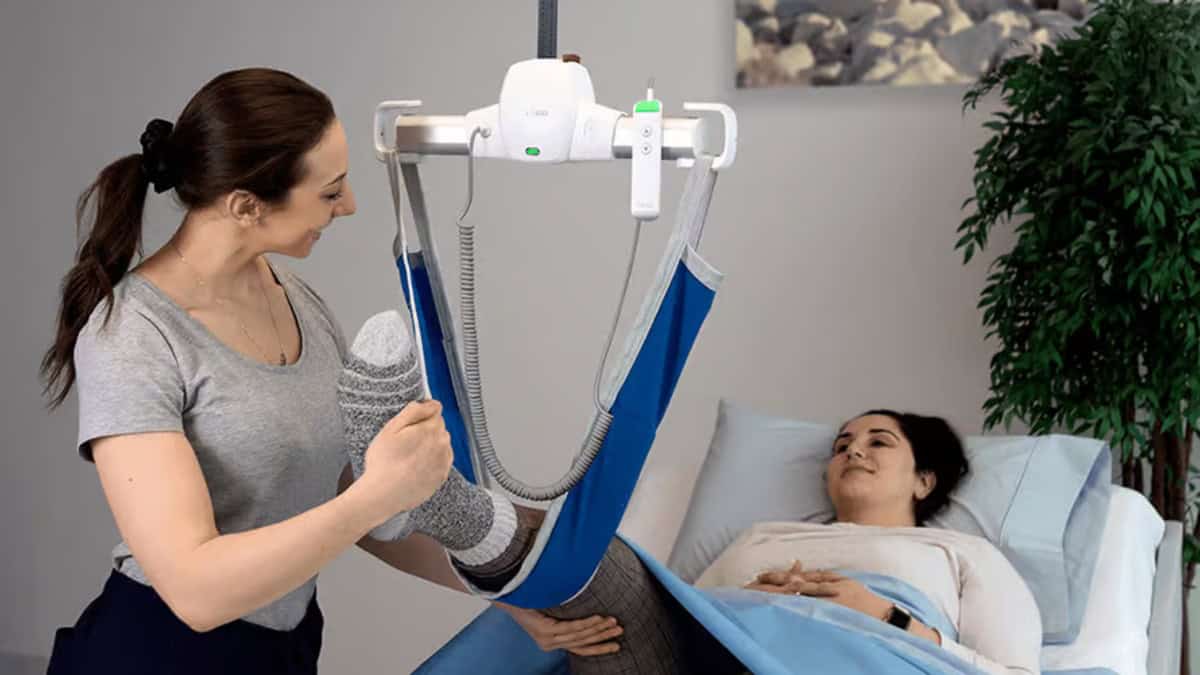
If you care for someone who needs help moving from bed to wheelchair, or from bedroom to bathroom, you already know how physically demanding transfers can be. A ceiling track lift carries the person along a track mounted overhead, which may help make transfers smoother for the person being lifted and less physically demanding for the caregiver. Naturally, one of the first questions families ask is what it will cost.
The honest answer is that it depends. Two homes rarely have the same layout, ceiling structure, or care needs, so the price of a ceiling track system can vary widely. Understanding what drives the cost will help you compare options and ask better questions.
What a ceiling track system includes
A complete system typically has several parts, and each one affects the final price:
- The lift motor, which raises and lowers the person and travels along the track
- The track itself, which can run in a straight line, curve, or cover an entire room
- One or more slings, chosen to fit the user’s size and transfer needs
- A charging station or power supply for the motor
- Professional installation, including mounting hardware and structural work
Factors that shape the price
Track layout. A short straight track over a bed is the simplest configuration. A traverse system that covers an entire room, or a track that continues through a doorway into a bathroom, requires more material and more installation time.
Ceiling structure. Tracks must be anchored to framing that can support the load. Some homes need additional blocking or reinforcement. Where the ceiling cannot support a track, a freestanding frame may be an alternative.
Weight capacity. Lifts are rated for different maximum loads. Higher capacity motors and tracks may cost more.
Number of rooms. Covering a bedroom and a bathroom, or more than one floor, increases the scope of the project.
Slings and accessories. Different sling styles serve different transfers, such as toileting, bathing, or seated repositioning. Slings wear over time and will eventually need replacement.
Permits and service. Some jurisdictions require permits for structural work, and ongoing maintenance, battery replacement, and periodic inspections should be part of your long term budget.
Ways families help pay for ceiling lifts
Funding options vary, and none are guaranteed, but these are worth exploring:
- Medicare Part B covers some durable medical equipment that a doctor prescribes for use in the home. Whether any part of a lift system qualifies depends on your situation, and permanently installed ceiling systems may be treated differently, so confirm coverage with Medicare or your plan before purchasing.
- Medicaid waiver programs in many states may help with home modifications. Eligibility and benefits differ by state.
- Veterans may be able to get help through VA programs. For example, the Home Improvements and Structural Alterations benefit can help with electrical work made necessary by installing home medical equipment, though it excludes some lift types. Your local VA Prosthetic and Sensory Aids Service can explain what applies to you.
- Some costs may count as medical expenses under IRS rules if you itemize. Ask a tax professional.
Why an in home assessment matters
Online price lists cannot account for your ceiling joists, door widths, or the specific transfers your loved one needs. Before choosing equipment, talk with your loved one’s doctor, physical therapist, or occupational therapist about which transfer methods and sling types are appropriate. They can help determine what fits your loved one’s specific needs. An in person assessment then lets a specialist measure the space, look at the structure, and recommend a system that fits both the room and the routine. You can learn more on our ceiling track lifts page, or read Can a Ceiling Track Lift Be Installed in an Existing Bedroom or Bathroom? for more on fitting a system into your current space.
Get a clear, written price for your home
Lift-Aids, Inc. will visit your home, evaluate the space, and provide a detailed estimate so you know exactly what is included before you commit. Request your in home estimate and take the guesswork out of planning safer transfers.
Request your estimate with Lift-Aids, Inc. today
Sources: Medicare.gov, What’s Covered, VA Home Improvements and Structural Alterations (HISA), OSHA Safe Patient Handling, IRS Publication 502, Medical and Dental Expenses
Disclaimer: This content is for general informational purposes only and does not constitute safety, engineering, or regulatory advice. Equipment selection and outcomes vary based on application, environment, and usage.