
09 Sep Can a Wheelchair Fit in a Home Elevator?
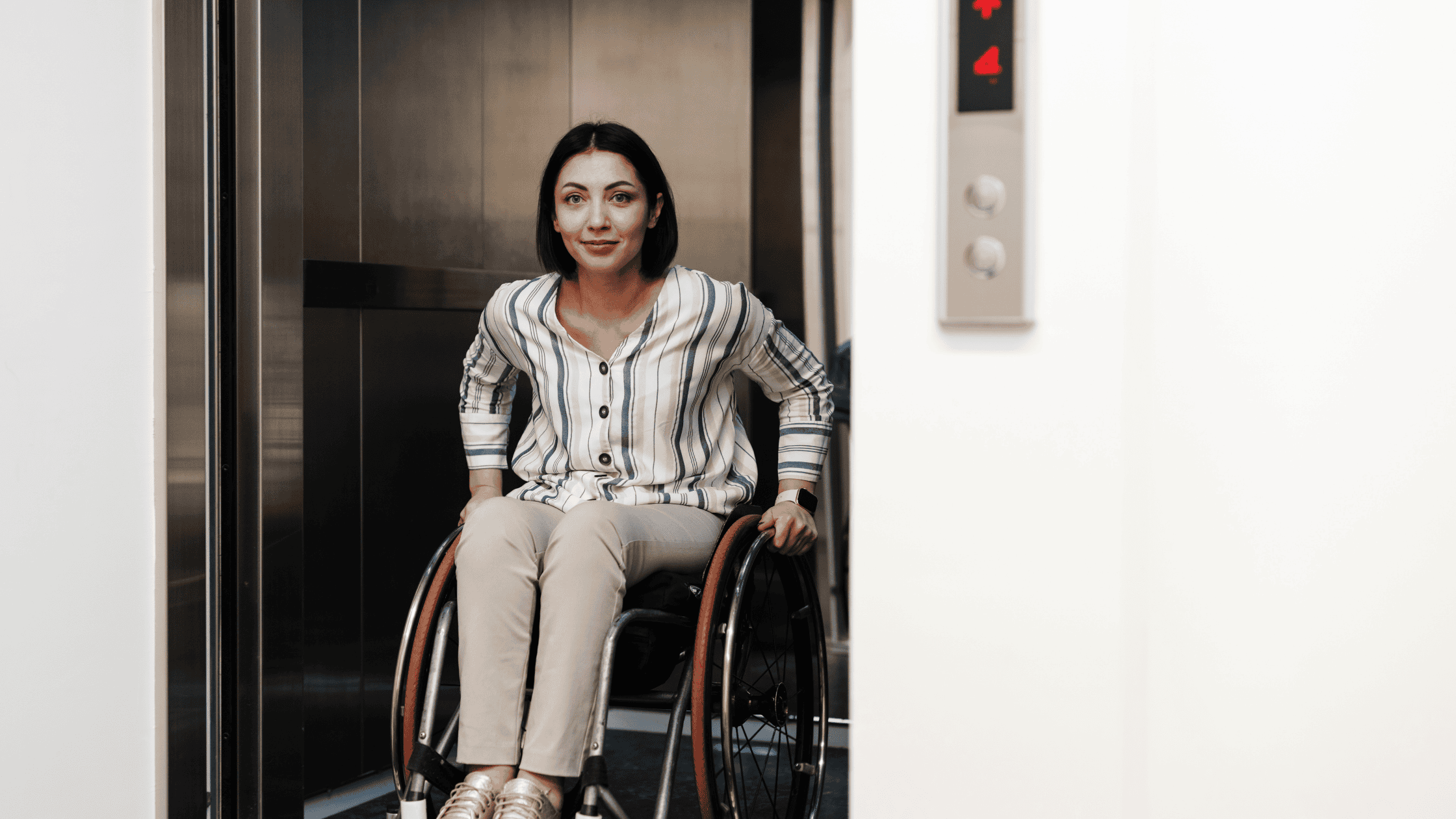
Yes, in most cases. A home elevator can carry a wheelchair user from floor to floor without a single transfer, as long as three things are planned around the chair: the cab size, the weight capacity, and the door setup. Get those right and the elevator becomes the easiest way to keep every level of the house within reach.
This guide walks through each one using the specifications for the Elvoron home elevator from Garaventa Lift, the elevator Lift Aids installs across North Texas. Whether you are a family planning for a loved one or a builder designing for a client who uses a chair, these are the numbers worth knowing before anyone frames a hoistway.
How Much Floor Space Does a Wheelchair Need?
A helpful reference point comes from the 2010 ADA Standards for Accessible Design, which set a clear floor space of 30 by 48 inches for one stationary wheelchair. Private homes generally are not held to ADA rules, but that footprint is a practical starting point when you compare cab sizes.
From there, the chair itself is what matters most. Many standard manual wheelchairs fall somewhere around 24 to 27 inches wide. Power chairs tend to run longer and heavier, and mobility scooters are often longer still. Before you choose a cab, measure the actual chair across its widest point and from the front of the footrests to the back of the frame. That one step prevents most sizing surprises.
What Cab Sizes Does the Elvoron Home Elevator Offer?
Garaventa lists five standard cab sizes for the Elvoron:
- 36 by 48 inches
- 36 by 54 inches
- 36 by 60 inches
- 40 by 50 inches
- 40 by 54 inches
Custom cabs are also available, with the option to build up to 21 square feet. Standard cab heights are 84 or 96 inches, and custom heights can fall anywhere from 80 to 96 inches.
How do those sizes line up with a wheelchair? The 36 by 48 inch cab covers the 30 by 48 inch reference footprint, but it leaves little room to spare, especially for a longer power chair. The 36 by 60, 40 by 50, and 40 by 54 inch cabs give the rider more breathing room. If a caregiver will regularly ride along, a larger standard cab or a custom size is usually the more comfortable choice. Your installer can compare your chair measurements against each option before you commit.
How Much Weight Can a Home Elevator Carry?
The Elvoron comes standard with a 750 pound capacity, and Garaventa offers an upgrade to 1,000 pounds. For wheelchair users, the number that counts is the combined weight of everything in the cab at once: the rider, the chair, any caregiver, and anything being carried.
Here is a simple example. A power chair weighing 300 pounds, a rider weighing 180 pounds, and a caregiver weighing 160 pounds add up to 640 pounds. That fits within the standard rating, but the 1,000 pound option leaves more margin for a heavier chair down the road or a second rider. Power chairs can weigh a lot more than people expect, so check the manufacturer label on the chair rather than guessing.
Do Door and Gate Choices Matter for a Wheelchair?
Yes, and they are easy to overlook. The Elvoron offers a few options:
- Accordion gate. The standard package uses a full height folding gate on the cab.
- Sliding cab door. Upgrade and premium packages swap the gate for a side sliding door.
- Power gate operator. Garaventa notes that the power operator makes the elevator easier to use for wheelchair users and people with limited hand strength. Power operators are also available for swinging hoistway doors.
- Landing door configurations. Several door layouts are available, so door placement can be planned around how the rider enters and exits on each floor.
Door layout deserves real attention. Where the floor plan allows, a cab that lets the rider roll in one side and out the other on a different floor can save them from turning around in a tight space. Clear door width depends on the cab size and door package you choose, so confirm it against the width of the chair during your estimate.
Planning Tips for Builders and Architects
When the homeowner uses a wheelchair, the cab decision drives the rest of the design, so make it early. A few details to settle before framing:
- Pick the cab size first. The hoistway is built around it, and changing cab size after framing is costly.
- Plan the pit and overhead. Garaventa recommends an 8 inch pit for the Elvoron. Overhead clearance is 96 inches for an 84 inch cab and 108 inches for a 96 inch cab, with some exceptions depending on the drive and door package.
- Leave clear approach space. Each landing needs open floor in front of the door so the rider can line up and roll straight in.
- Choose the drive system with the floor plan in mind. The Elvoron comes in hydraulic and in line drive options with different travel and stop limits.
For the full planning picture, see our guides on how architects can design elevator ready homes and how to spec an elevator for a North Texas home addition.
When Is a Platform Lift a Better Fit?
An elevator is the right answer for moving between full floors. When the barrier is shorter, such as a few entry steps, a porch, or a raised garage door landing, a vertical platform lift is often simpler. Garaventa rates its Genesis vertical platform lifts for 750 pounds, and the rider stays in the chair the whole time. Our comparison of vertical and inclined platform lifts explains how to choose between them.
Key Takeaways
- A home elevator can carry a wheelchair user between floors without a transfer when the cab, capacity, and doors are planned around the chair.
- The Elvoron offers five standard cab sizes from 36 by 48 inches up to 40 by 54 inches, plus custom cabs up to 21 square feet.
- Capacity is 750 pounds standard with a 1,000 pound upgrade. Add up rider, chair, and caregiver to choose.
- Door layout and a power gate operator make daily use much easier for wheelchair riders.
- Measure the actual chair before choosing a cab.
Frequently Asked Questions
Can a Power Wheelchair Fit in a Home Elevator?
Often, yes, but power chairs are longer and heavier than manual chairs, so cab length and capacity both matter more. A larger standard cab or a custom cab, paired with the 1,000 pound capacity option, is a common approach. Measure the chair and check its weight label first.
Can a Caregiver Ride in the Elevator With a Wheelchair User?
Yes, if the cab is large enough for both people and the combined weight stays within the rated capacity. Plan for this from the start if a caregiver will ride along regularly.
Does a Home Elevator Have to Meet ADA Requirements?
Private residences are generally not covered by the ADA. Residential elevators follow the ASME A17.1 safety code, and the Elvoron is built to the 2022 edition of ASME A17.1. Code requirements are confirmed project by project during permitting and inspection.
Can a Wheelchair Accessible Elevator Be Added to an Existing Home?
In many homes, yes. It depends on available space, structure, and where the hoistway can go. Our guide on adding a home elevator to an existing house covers what to look for.
The best way to know whether a wheelchair will fit comfortably is to measure the chair, the home, and the people who will ride. Lift Aids has installed home elevators across North Texas for more than five decades as a licensed Texas Elevator Contractor and Garaventa’s first U.S. dealer. Request an estimate, and our team will match the cab, capacity, and doors to your chair and your floor plan, or call us at 817.835.0035. Family owned and women owned since 1968.
Disclaimer: This content is for general informational purposes only and does not constitute safety, engineering, or regulatory advice. Equipment selection and outcomes vary based on application, environment, and usage.