
15 Jul What Is an Evacuation Chair and Does My Building Need One?
Every September, FEMA leads National Preparedness Month, and one question it puts back on the table for facility managers, school administrators, and church staff is simple: if the elevator goes down during a fire alarm or power outage, how does a person with limited mobility get out of the building? For any building with more than one occupied floor, an evacuation chair is usually the answer.
What an Evacuation Chair Actually Is
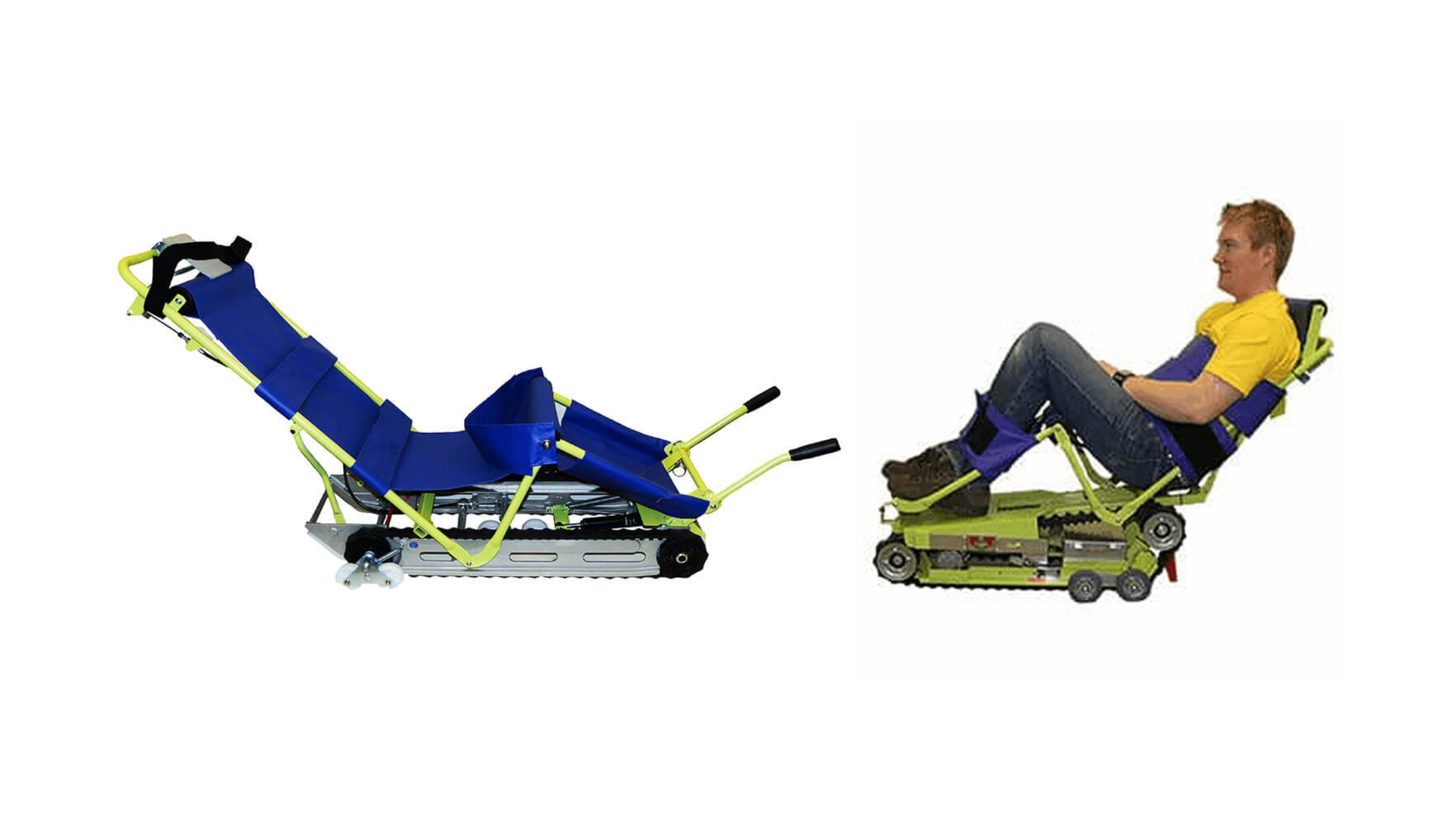
An evacuation chair is a lightweight, portable seat built to move a person down a stairwell when elevators cannot be used. Most models fold flat for storage in a closet or on a wall bracket near a stairwell, then unfold in seconds when needed. A single trained staff member guides the chair down the stairs using its built-in tracks or wheels, which help control the descent along the stair edges instead of requiring the operator to lift or carry the occupant’s full weight.
It helps to know what an evacuation chair is not. It is not a wheelchair, which is not built for stairs at all. It is not a stair lift either, which is mounted permanently to one staircase. An evacuation chair is portable, needs no permanent installation, and can be positioned near any stairwell that serves an occupied upper floor.
Who Typically Needs One
Any building where occupants who cannot use stairs unassisted might be on a floor above ground level is a candidate. In practice, that most often includes:
- Schools, where students, staff, or visitors may use wheelchairs, walkers, or be recovering from an injury.
- Churches and other places of worship, which often serve a wide range of ages and mobility levels across multiple floors.
- Offices and other commercial buildings with more than one story, where employees or visitors need a documented way to exit if the elevator is out of service.
If your building fits that description and you do not already have a plan for moving someone with limited mobility down a stairwell, that gap is worth closing before an emergency, not after.
How It Fits Into a Broader Emergency Preparedness Plan
An evacuation chair is one piece of an emergency plan, not the whole plan. A complete approach generally includes identifying which occupants may need assistance, placing chairs near the stairwells those occupants use most, training designated staff on how to operate them, and practicing the process during regular fire drills. Building and fire code requirements vary by occupancy type and by jurisdiction, so any specific requirement for your facility should be confirmed with your local fire marshal or your building’s ADA compliance officer rather than assumed from a general article like this one. For schools specifically, our TAS accessibility guide for schools and public buildings covers the broader compliance picture, and our church ADA and TAS compliance guide does the same for houses of worship.
Training and Maintenance Basics
An evacuation chair only helps in a real emergency if the staff expected to use it have practiced beforehand. Most facilities designate two or three trained operators per floor and repeat that training on a set schedule, often alongside annual fire drills. Maintenance is straightforward but should not be skipped: check the folding mechanism, straps, and wheels or tracks on a regular basis, and retire any chair that shows wear before it is needed.
Talking to a Specialist About Your Building
Every stairwell, floor plan, and occupancy count is different, so the number of chairs your building needs and where they should be stored is specific to your facility. A walk-through with an accessibility equipment specialist is a faster and more reliable way to answer that than guessing from a general checklist.
Frequently Asked Questions
Does an Evacuation Chair Replace a Fire Evacuation Plan?
No. It is equipment that supports the plan your facility already has, or is building, not a substitute for staff training, drills, or coordination with local fire officials.
How Many Evacuation Chairs Does a Building Need?
That depends on the number of stairwells, floors, and occupants who may need assistance. A site assessment is the most reliable way to answer this for your specific building.
Can One Evacuation Chair Serve an Entire Multiple-Story Building?
Generally, no. Most facilities keep at least one chair near each stairwell that serves an occupied upper floor, so help is close by rather than several floors away when it is actually needed.
Lift-Aids has supplied and serviced accessibility equipment for North Texas schools, churches, and businesses since 1968. If your facility needs evacuation chairs, portable lifts, or a broader look at your accessibility equipment, request an estimate and a specialist will walk you through what your building needs.
Disclaimer: This content is for general informational purposes only and does not constitute safety, engineering, or regulatory advice. Equipment selection and outcomes vary based on application, environment, and usage.